

Listen now on YouTube | Spotify | Apple Podcasts | Amazon Music
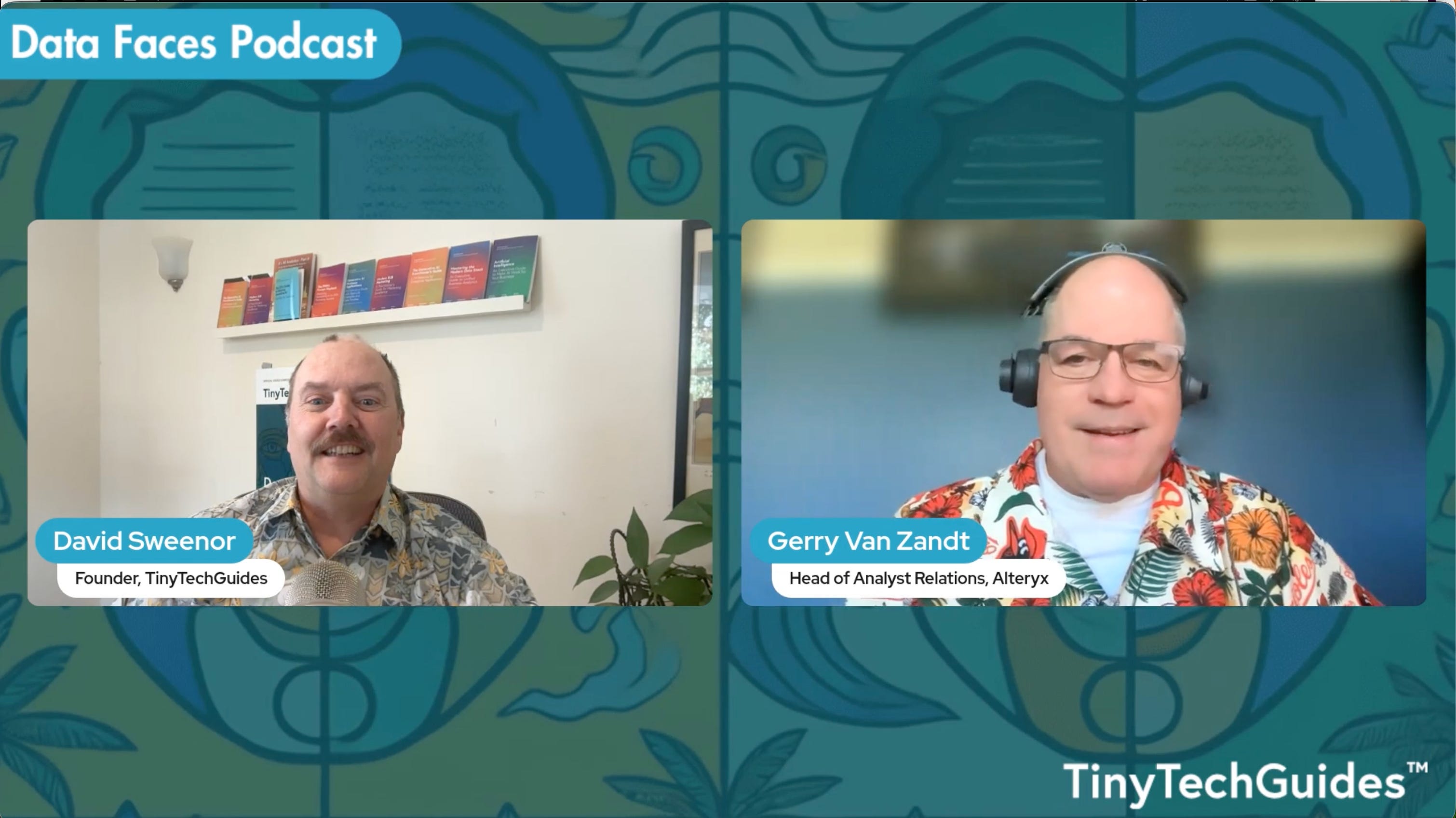
▶ Watch the full episode and read the transcript: Gerry Van Zandt on the Data Faces Podcast
Anyone who has worked on a Gartner Magic Quadrant, Forrester Wave, or IDC MarketScape submission knows the questionnaire. It runs to hundreds of detailed rows, and I’ve never been sure who on the other side could read it all. Now my clients use AI to help draft those responses, and I leaned on Claude for a client’s Magic Quadrant submission myself this summer. Some analyst firms have started using AI to pre-fill the questionnaire before it reaches the vendor. So, is AI just talking to AI? If so, what of that?
That question sits inside a bigger one that marketing leaders keep asking: are industry analysts still relevant when a buyer can ask a chatbot for a shortlist? Forrester’s 2025 Buyers’ Journey Survey found that 94 percent of business buyers use AI in their purchasing decisions, and twice as many buyers named gen AI as a meaningful source of information than any other source.[1] Numbers like those fed a meme that ran from last year into this one: AI would displace analysts, and Gartner was dead. Investors took it seriously enough that Gartner’s stock fell more than 50 percent from its 2025 highs.[2] Gerry Van Zandt has spent close to 30 years in analyst relations (AR), and he argues the opposite. When anyone can generate a vendor comparison in minutes, he thinks the people who can tell you which comparison to trust matter more than they did before.
“AI can tell you what the market appears to believe, but an experienced analyst can tell you whether you should believe that or not.”
— Gerry Van Zandt, Senior Director of Analyst Relations, Alteryx
So what does AI do well in analyst relations, and what does it still need a person for? Gerry is a heavy AI user himself, and his answer bifurcates AR into two jobs.
About Gerry Van Zandt
Gerry Van Zandt is senior director of analyst relations at Alteryx, where he has run AR for five and a half years. Before that, he spent about nine years in AR at Intel, seven and a half at HP, and six at Oracle, and he has served on the board of the Institute of Industry Analyst Relations (IIAR). We worked together at Alteryx, and he has briefed more Gartner analysts than almost anyone I know.
In this episode, Gerry and I discuss:
- What influences a technology buyer in 2026, and how much that list has grown in a decade
- How AI cuts the time and people needed to answer an analyst questionnaire
- Whether Gartner and the other big firms are pay-to-play
- How a startup with no paid relationship landed in a Gartner Cool Vendors report
- What companies still get wrong about analyst relations
Watch the full conversation here:
What AI already does well in analyst relations
Gerry has used AI on analyst requests for information (RFIs) for the last 18 months, including the big, deep ones. By his estimate, AI cuts about 70 percent of the time needed to complete an RFI and reduces the number of internal experts who review a response from 15 or 20 to five or six, saving hours across the company. His method matters as much as the savings. Gerry doesn’t feed a PDF into ChatGPT and wait for a finished questionnaire; he works question by question and section by section, and he curates every answer that comes back. A few years ago, Alteryx branded its early AI capabilities as AiDIN, and that name still turns up in some internal large language models (LLMs). An answer built on a product name that’s two or three years out of date reads fine to a reviewer who doesn’t know better, and an analyst will catch it.
AI handles most of his preparation work as well. Before an executive meets an analyst, Gerry can build a one-page brief in about five minutes that covers the analyst’s focus and mindset, the questions and choke points to expect, and the three things the executive needs to get across. When relevant analyst reports come out, he has Gemini write a one-paragraph summary of each and sends them to internal teams in about three minutes, a job that used to take him an hour or more.
Each of these tasks pulls together existing information and drafts something useful from it. I’d call that the aggregation job, and it’s the kind of recurring go-to-market work I’ve been writing about as AI GTM engineering: a task becomes a system with a built-in human review step.
What an analyst knows that a model doesn’t
A technology buyer needs judgment from an industry analyst as much as aggregation, and Gerry gives three reasons why an AI assistant can’t supply that judgment.
Gerry starts with access, because analysts often receive briefings under nondisclosure agreements (NDAs) on roadmaps and strategy that never appear in public, so no scraper or LLM trained on external data can see them. When a vendor briefs an analyst on what’s coming next year, that context shapes the analyst’s view of where the vendor is headed. Gerry counts that as another benefit of a strong analyst relationship, because you can brief a person on what’s coming, and no AI can do the same.
Trust comes next, and Gerry is candid about how the profession has changed. Twenty years ago, a Gartner analyst was often a practitioner with two decades of experience who became an analyst and retired as one. Today, some analysts join right out of school or with three to five years of experience. Even so, he says the big firms “still possess a very high level of institutional trust,” and independent experts and former analysts have a harder time earning it.
“Nobody is going to make an organizational, major platform buying decision based on an AI query and an AI shortlist. They’re going to know they need a throat to choke.”
— Gerry Van Zandt, Senior Director of Analyst Relations, Alteryx
Accountability rounds out his case. When a platform decision goes wrong, a buying committee can point to a published evaluation, and a chatbot can’t answer for anything. Forrester’s own buyer research points the same way. When AI answer engines deliver incomplete or unreliable information, Forrester found that buyers compensate “by seeking validation from trusted sources, emphasizing the value of human contact in the buying process.”[3]
Is Gartner pay to play?
Before we recorded, I told a few people I was interviewing an AR expert, and nearly all of them asked the same thing: is it pay to play? Gerry has heard the question for 30 years, and his answer for the major firms, and even the minor ones, is “unequivocally no.” He doesn’t believe any Magic Quadrant, Wave, or MarketScape placement depends on how much a vendor spends with the firm. However... money does buy access.
A paid relationship gets you inquiries, briefings, and time with analysts at conferences, which Gerry says “helps grease the skids.” He has also watched analysts shut down sales topics on the spot when a rep joins a call, deferring to the account team because it isn’t their area. I agree with him, and I say that as someone who called the Magic Quadrant process more theater than methodology. Vendors pay handsomely for the right to quote their placement in marketing, but in my experience the research, sales, and events sides of these firms don’t talk to each other.
Gerry’s best evidence comes from early in his career, when he worked AR on the agency side. He got a startup client with no paid Gartner relationship into a Cool Vendors report. This Gartner report usually profiles four to six early-stage companies doing something innovative in a market. He didn’t know the analyst beforehand, so his job was to figure out who the right analyst was and brief them. Within two days of the report coming out, the startup’s CEO told him that Michael Dell personally called to learn more about what the company was doing.
For a marketing leader with a small budget, that story matters more than the pay-to-play debate. Gartner, Forrester, and IDC will brief a vendor that has no contract with them, especially one doing something interesting, and no AI tool can get that access on your behalf.
“Good relationships are the currency with which effective analyst relations is achieved.”
— Gerry Van Zandt, Senior Director of Analyst Relations, Alteryx
Where marketing teams get analyst relations wrong
Analysts have written plenty of columns about what they dislike in AR people, and Gerry says the complaint has changed. Twenty years ago, companies expected AR to act as a gatekeeper that metered every contact between an analyst and an executive. He thinks that model stopped working once people became easier to reach, and he now sees AR’s job as preparing executives and shaping messages so that each engagement is productive.
Today, analysts more often complain that AR people don’t know the business well enough to speak for the products, so every substantive question gets routed to an expert. Gerry has deliberately built his own product knowledge at Alteryx so he can represent the company himself and bring in an expert when the conversation needs one.
The list of people who shape a technology purchase has also grown. A decade ago, an executive making a platform decision would rely on a handful of inputs, mainly analyst reports, peers, and the trade press. Now there are podcasters and influencers with larger followings and opinions, former analysts running their own consultancies, and vendor shortlists that gen AI chatbots produce on request, and Forrester counts nine external influencers in a typical business purchase.[4] Gerry maps each type to a stage in the buying cycle, with press, blogs, and LinkedIn driving awareness and analysts mattering most when a buying team narrows its shortlist. An analyst’s view also travels through the journalists and independent experts who repeat it, which he calls a multiplier effect.
Forrester, IDC, and Gartner have each responded to AI differently. Forrester launched an agent for Microsoft 365 Copilot in April 2026 and offers a Model Context Protocol (MCP) connector so clients can bring its research into their own systems.[5] IDC offers a plugin that puts its research and data inside Claude.[6] Gartner has built its gen AI tool, AskGartner, into its own client platform, and Gerry reads the firm’s recent signals as a commitment to keeping clients in that portal.[7] He admits AskGartner was “pretty crummy at first” and says it’s “pretty good now.” Either way, a marketing team’s AR plan has to account for analyst research that now reaches buyers inside the AI tools they already use.
What to do with the hours AI gives back
So, where should a marketing leader put AR time and budget now? Gerry thinks AR is more relevant than ever, and that it has to cover far more ground than Gartner, Forrester, and IDC. Here’s how I’d act on that:
Turn the aggregation work into systems: RFI drafting, executive briefing prep, and research summaries come around every quarter, so build each one once as a repeatable workflow. Write Gerry’s curation step into it, along with a current list of product names, so a retired brand like AiDIN never reaches an analyst. I wrote earlier this month about moving from one-off prompts to GTM systems.
Spend the saved hours on relationships: Gerry calls relationships the one constant he has seen in 30 years of AR. Use the time you get back for briefings, inquiries, and roadmap updates under NDA, since that context never reaches an AI assistant, and invest in the product knowledge that lets your AR lead field analyst questions without escalating every one.
Map every influencer to a stage of the buying cycle: List the analysts, independent experts, and podcasters your buyers follow, and note which stage each one influences. That map shows where a briefing or a sponsorship does the most good, and it keeps the big three firms in proportion.
Let AI draft the submission, and spend the time it saves making sure the analyst reading it already knows your roadmap and trusts the person who briefed them.
Listen to the full conversation with Gerry Van Zandt on his Data Faces Podcast episode page.
Based on insights from Gerry Van Zandt, Senior Director of Analyst Relations at Alteryx, featured on the Data Faces Podcast.
Podcast highlights
- [0:05] David introduces Gerry Van Zandt and the question for the episode: are analysts still relevant in the age of AI?
- [4:30] The Air Force pilot dream that turned into a technology career
- [5:41] A two-minute primer on what analyst relations is and why it matters
- [7:23] What influences a technology buyer in 2026, compared with five years ago
- [9:57] Veteran analysts aging out, and why institutional trust has held
- [12:42] “AI can tell you what the market appears to believe”
- [14:54] AI pre-filled RFIs, and the 70 percent time savings
- [17:44] Relationships as the currency of analyst relations
- [19:17] Is it pay to play?
- [20:41] The NDA information no AI can reach
- [23:24] Briefing Gartner with no subscription, and the Cool Vendors story
- [25:09] Weighing a Gartner analyst against an independent with 50,000 followers
- [27:07] What companies get wrong about analyst relations
- [29:38] Five-minute briefing docs and three-minute report summaries
- [32:21] Genealogy and a World War II howitzer battalion
- [35:21] Where CMOs and CEOs should invest in AR
- [37:11] How Forrester, IDC, and Gartner are responding to AI
Frequently asked questions
Are industry analysts still relevant in the age of AI?
Industry analysts remain relevant because AI tools aggregate information, while analysts supply judgment that buyers can trust. Gerry Van Zandt, senior director of analyst relations at Alteryx, argues that AI can tell you what the market appears to believe. Still, an experienced analyst can tell you whether to believe it. Analysts also see roadmap briefings under nondisclosure agreements that no AI model can access, and large platform decisions still need an accountable, independent evaluation to point to.
Is Gartner pay to play?
According to Gerry Van Zandt, who has worked in analyst relations for close to 30 years, major analyst firms aren’t pay-to-play. He doesn’t believe any Gartner Magic Quadrant, Forrester Wave, or IDC MarketScape placement depends on how much a vendor spends. A paid relationship buys access, such as inquiries, briefings, and time with analysts at events, which makes engagement easier. Vendors also pay for the right to quote their placement in marketing materials.
How is AI changing analyst relations?
AI is taking over the aggregation work in analyst relations (AR). Gerry Van Zandt of Alteryx estimates that AI cuts about 70 percent of the time needed to complete an analyst request for information (RFI) and reduces the internal reviewers from 15 or 20 to five or six. He also uses AI to write a one-page executive briefing in about five minutes. He reviews every answer question by question, because AI tools can return out-of-date product names.
Can a startup brief Gartner without a paid subscription?
Yes. Gartner, Forrester, and IDC will take briefings from vendors with no paid relationship, especially vendors doing something innovative. Gerry Van Zandt got a startup with no Gartner contract into a Cool Vendors report, a Gartner report that usually profiles four to six innovative early-stage companies in a market. According to the startup’s CEO, Michael Dell called to learn more within two days of the report’s publication. The work is to find the right analyst and brief them well.
What do companies get wrong about analyst relations?
Twenty years ago, the common mistake was treating analyst relations (AR) as a gatekeeper that controlled every analyst conversation. Today, according to Gerry Van Zandt of Alteryx, analysts’ most frequent complaint is that AR people don’t know the business well enough to speak for the products. He recommends that AR leads build enough product knowledge to represent the company themselves and bring in executives or subject matter experts when a conversation needs them.
How are Gartner, Forrester, and IDC using AI?
The three largest analyst firms are taking different approaches to AI. Forrester launched an AI agent for Microsoft 365 Copilot in April 2026 and offers a Model Context Protocol (MCP) connector for clients’ own systems. IDC offers a plugin that brings its research and data inside Claude. Gartner has built its AskGartner gen AI tool into its own client platform, which Gerry Van Zandt of Alteryx reads as a commitment to keeping clients in the Gartner portal.
About David Sweenor
David Sweenor is the founder and host of the Data Faces podcast, where he talks with the people who are making data, analytics, AI, and marketing work in the real world. He is also the founder of TinyTechGuides and a recognized top 10 AI thought leader and international speaker who specializes in practical business applications of artificial intelligence and advanced analytics.
With over 25 years of hands-on experience implementing AI and analytics solutions, David has supported organizations including Alation, Alteryx, TIBCO, SAS, IBM, Dell, and Quest. His work spans marketing leadership, analytics implementation, and specialized expertise in AI, machine learning, data science, IoT, and business intelligence. David holds several patents and consistently delivers insights that bridge technical capabilities with business value.
Books
- Artificial Intelligence: An Executive Guide to Make AI Work for Your Business
- Generative AI Business Applications: An Executive Guide with Real-Life Examples and Case Studies
- The Generative AI Practitioner’s Guide: How to Apply LLM Patterns for Enterprise Applications
- The CIO’s Guide to Adopting Generative AI: Five Keys to Success
- Modern B2B Marketing: A Practitioner’s Guide to Marketing Excellence
- The PMM’s Prompt Playbook: Mastering Generative AI for B2B Marketing Success
Follow David on Twitter @DavidSweenor and connect with him on LinkedIn.
[1]Buten, John. “B2B Buyers Make Zero-Click Buying Number One.” Forrester, January 22, 2026. https://www.forrester.com/blogs/b2b_buyers_make_zero_click_buying_number_one/
[2]Investing.com. “Gartner Earnings in Focus: AI Threat Tests Research Model.” Investing.com, May 4, 2026. https://www.investing.com/news/earnings/gartner-earnings-in-focus-ai-threat-tests-research-model-93CH-4656676
[3]Forrester. “Forrester’s 2026 Buyer Insights: GenAI Is Upending B2B Buying As Leaders Face Mounting Pressure To Justify Every Dollar Spent.” Forrester, January 21, 2026. https://www.forrester.com/press-newsroom/forrester-2026-the-state-of-business-buying/
[4]Forrester. “Forrester’s 2026 Buyer Insights: GenAI Is Upending B2B Buying As Leaders Face Mounting Pressure To Justify Every Dollar Spent.” Forrester, January 21, 2026. https://www.forrester.com/press-newsroom/forrester-2026-the-state-of-business-buying/
[5]Forrester. “Forrester Launches Forrester AI Agent For Microsoft 365 Copilot To Deliver Research-Driven Insights Into Leaders’ Workflows.” Forrester, April 28, 2026. https://www.forrester.com/press-newsroom/forrester-ai-agent-microsoft-365-copilot/
[6]IDC. “Quanta in Claude and MCP.” IDC Developer, accessed September 29, 2026. https://www.idc.com/developer/quanta/
[7]Gartner. “AskGartner FAQ: Answers About Gartner’s AI-Powered Research Tool.” Gartner, accessed September 29, 2026. https://www.gartner.com/en/products/ask-gartner-faqs


